10 Common Preschool Parenting Mistakes
& How to Avoid Them
Parenting a preschooler is one of the most rewarding yet challenging journeys. Discover research-backed insights to replace common pitfalls with joyful, confidence-building habits in Valasaravakkam, Porur, and Alwarthirunagar.
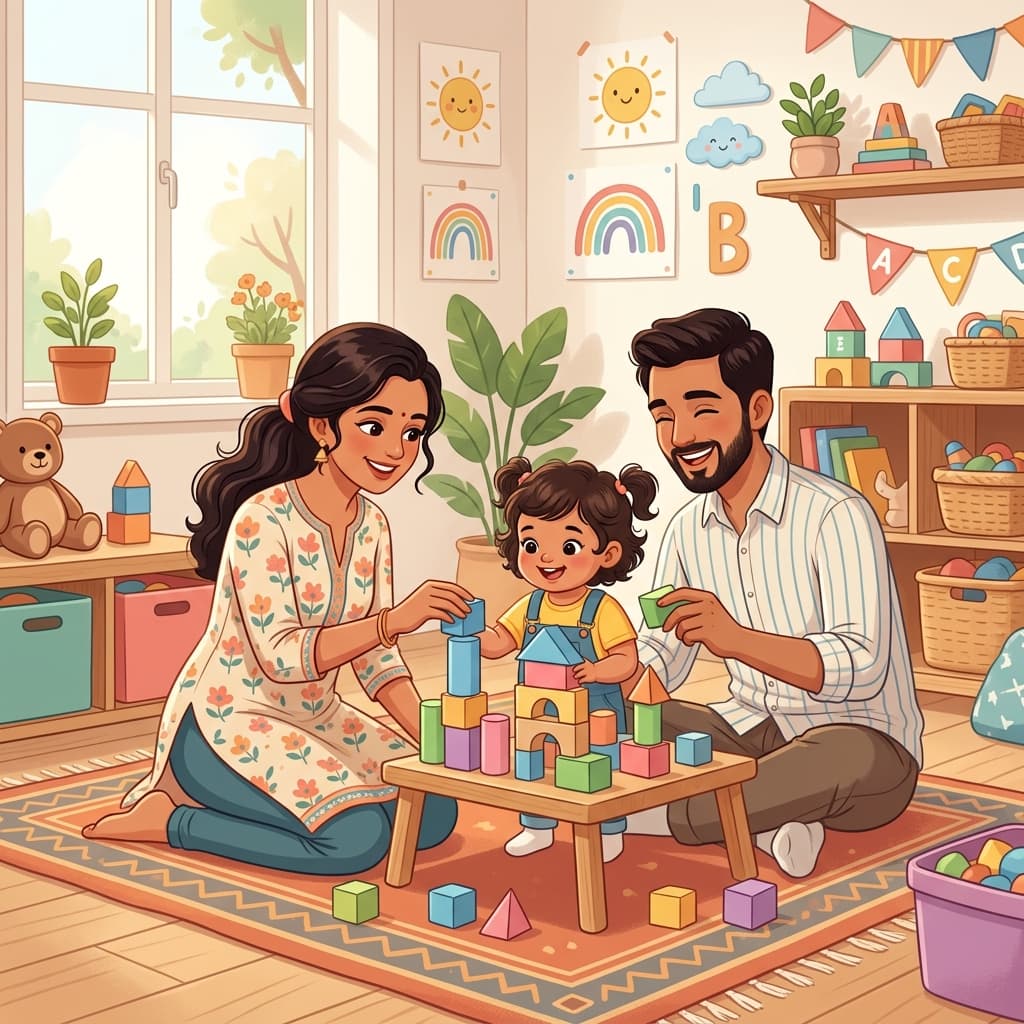

Parenting in Early Childhood: Growth Over Perfection
Every parent wants the absolute best for their child. From researching the top preschools in Chennai to buying educational toys, parents dedicate immense energy to giving their toddlers a head start. Yet, in the whirlwind of daily life, it is remarkably easy to fall into well-intentioned traps that can inadvertently increase stress for both parent and child.
The early years between ages 2 and 6 are foundational for brain development, emotional self-regulation, and personality formation. Recognizing common parenting missteps isn't about feeling guilty—it is about making simple, intentional shifts that bring more joy, calm, and confidence into your home.
Whether you reside in Valasaravakkam, Porur, or Alwarthirunagar, here are the 10 most common preschool parenting mistakes and practical, research-backed ways to avoid them.
The 10 Common Mistakes & How to Shift Them
Explore each mistake, why it happens, and the joyful, high-impact habit to replace it with:
Comparing Your Child's Growth to Peers or Siblings
Watching another 3-year-old recite alphabets or sit quietly while your child zooms around the room often triggers parental anxiety. It's easy to wonder: 'Is my child behind?'
Early childhood development is non-linear and unique to every child. Constant comparisons create silent pressure, making toddlers feel inadequate or anxious when attempting new skills.
Benchmark your child only against their own past milestones. Celebrate their individual wins—whether it's trying a new food, building a higher block tower, or expressing a feeling verbally.
Over-Scheduling & Neglecting Unstructured Play
Enrolling toddlers in back-to-back classes, tuition, and structured workbooks leaves little to no time for open-ended, free-choice exploration.
Unstructured play is the highest form of early brain research. It develops executive function, creative problem solving, emotional self-regulation, and spatial awareness far better than rigid worksheets.
Protect at least 2 hours of unstructured playtime daily. Provide open-ended materials like building blocks, clay, cardboard boxes, and sensory bins that invite self-directed imagination.
Rushing Formal Academics Before Social-Emotional Readiness
Pressuring toddlers at age 2 or 3 to write letters perfectly or memorize math facts before they have developed shoulder stability, hand strength, or emotional confidence.
Forcing pencil grip and formal drills prematurely strains fine motor muscles and causes early academic burnout and school anxiety.
Focus first on precursor skills: pinching playdough for finger strength, outdoor climbing for core stability, and interactive storytelling for language foundation. Formal writing happens effortlessly once motor skills mature.
Rescuing Children Immediately from Minor Frustrations
Stepping in to zip their jacket, stack the fallen block, or answer questions for them the instant they show a hint of struggle.
Over-rescuing deprives toddlers of 'productive struggle'—the exact moment where brain synapses connect and resilience is forged. It can lead to learned helplessness.
Practice the 'Wait 30 Seconds Rule'. Pause before intervening. Offer scaffolding hints ('What happens if we turn that block sideways?') rather than completing the task yourself.
Inconsistent Daily Routines & Chaotic Transitions
Having unpredictable bedtimes, irregular mealtimes, or changing house rules depending on parent fatigue.
Young children lack an adult's sense of time. Predictability provides them with emotional security. Inconsistency often manifests as sensory overload, bedtime battles, and frequent tantrums.
Create visual daily routine cards (Brush -> Breakfast -> Preschool -> Play -> Story -> Sleep). Give gentle 5-minute transition warnings before ending play.
Using Digital Screens as the Primary Calm-Down Pacifier
Handing smartphones or tablets during tantrums, mealtimes, or car rides to keep toddlers quiet and docile.
Rapidly changing digital stimuli over-stimulate young nervous systems, hindering the natural development of impulse control, attention span, and real-world social interaction.
Replace screen pacification with sensory regulation tools—squishy toys, picture books, or co-regulation hugs. Keep screen time intentional, co-viewed, and limited.
Relying on Sweets or Toys as Constant Bribes & Rewards
'If you sit nicely at dinner, I'll give you a chocolate' or 'If you stop crying, I'll buy you a toy.'
Constant material bribes erode intrinsic motivation. Children learn to perform tasks only for external compensation and can develop unhealthy emotional relationships with food.
Use descriptive verbal praise ('You worked so hard to put your shoes on!') and non-material rewards like a extra park trip, a family dance session, or a special bedtime story.
Suppressing Big Emotional Outbursts ('Stop Crying!')
Telling toddlers to 'stop crying over nothing,' punishing meltdowns, or dismissing fears as foolish.
A preschooler's emotional brain (limbic system) is fully active, but their logical brain (prefrontal cortex) is still under construction. Suppressing tears teaches them to hide feelings rather than process them.
Practice Co-Regulation: Name the emotion and validate it first ('I see you are sad that we have to leave the playground'), then hold your boundary calmly.
Micromanaging Independence & Self-Care Tasks
Feeding the child, dressing them, and packing their bag well past toddlerhood because adults can do it faster and cleaner.
Children build genuine self-esteem through competence. Doing everything for them signals that they are incapable, stalling motor development and independence.
Allow extra time during morning routines for self-help tasks. Encourage them to wear slip-on shoes, clear their plate, wash hands, and put away toys independently.
Treating Preschool as a Drop-Off Service Rather Than a Partnership
Viewing playschool as just babysitting and rarely engaging with teachers about developmental progress or home alignment.
Children thrive when there is harmony between home and school. Inconsistent expectations between home and classroom create confusion for young learners.
Actively communicate with early childhood educators. Share home observations, attend parent consultations, and extend classroom learning themes into home routines.
At-a-Glance: Parenting Mindset Shift Summary
Creating a Nurturing Partnership in Valasaravakkam
At Qurious Lil'Mindz, we recognize that early childhood education is a joint journey between parents and educators. Located in Valasaravakkam and serving families across Porur and Alwarthirunagar, our play-based curriculum emphasizes emotional safety, self-directed exploration, and positive behavior reinforcement.
We host regular parent workshops, share daily classroom developmental updates, and provide personalized consultations to ensure your child experiences warm, loving consistency at home and in school.
Frequently Asked Questions by Parents
How can I tell if I am pushing my preschooler too hard academically?
Signs of academic over-pushing include resistance to drawing/writing, frequent tears during table tasks, loss of curiosity, or irritability. Early childhood learning should feel like play, discovery, and exploration.
What should I do when my toddler throws a tantrum in public?
Stay calm and keep them safe. Move to a quieter spot if needed. Avoid bargaining with treats or yelling. Validate their feeling in simple words ('I know you are disappointed') and wait for the emotional wave to pass before discussing it.
How does Qurious Lil'Mindz support parents in avoiding these mistakes?
We offer continuous parent guidance, expert educator workshops, play-based curriculum alignment, and regular developmental check-ins for families in Valasaravakkam, Porur, and Alwarthirunagar.