12 Fun & Easy Preschool Learning Activities
to Try at Home
Turn everyday household items into powerful early learning moments. Discover 12 hands-on, play-based activities for toddlers & pre-K children in Valasaravakkam, Porur, and Alwarthirunagar.
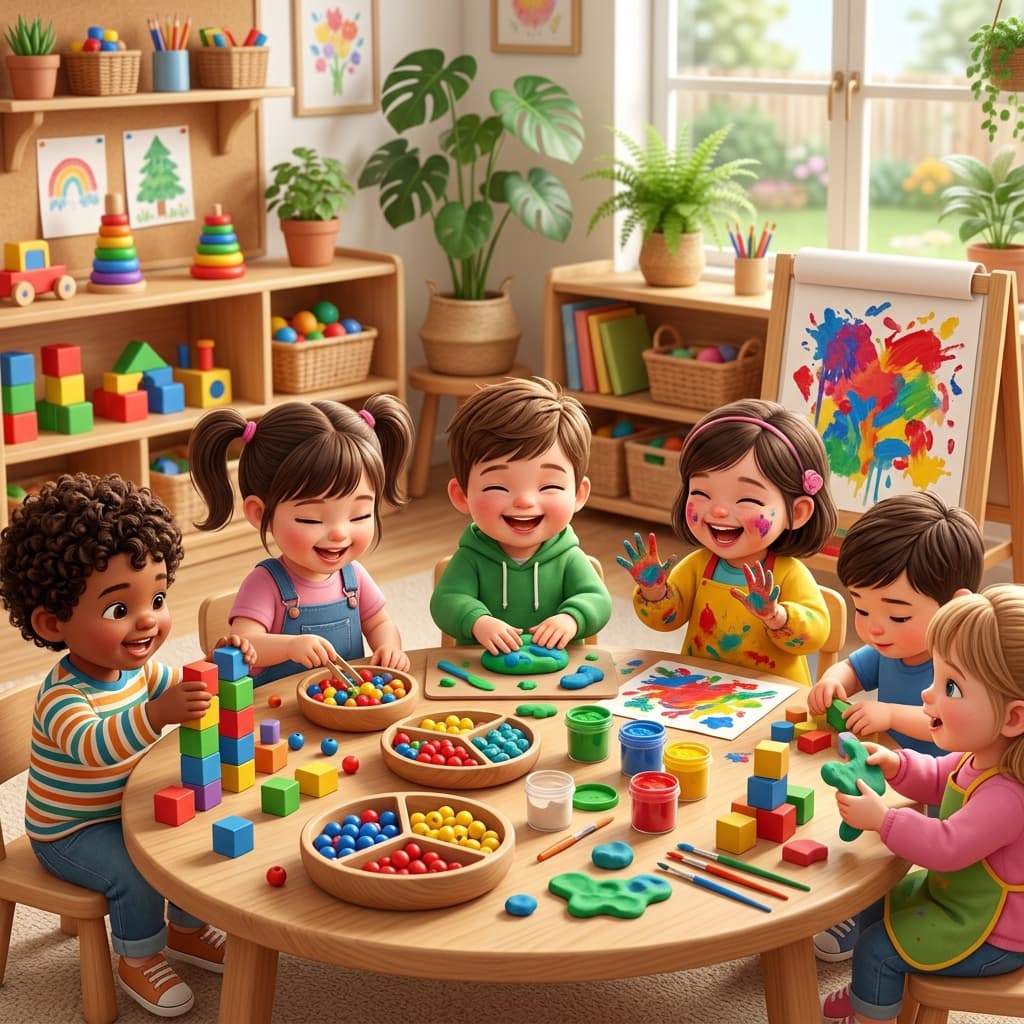

Why Hands-On Activities Beat Worksheets & Screens
When parents think of "early education", it is tempting to imagine flashcards, tracing workbooks, or educational apps on a tablet. But early childhood neuroscientists agree on a fundamental truth: young children learn best through active, tactile discovery.
Between ages 2 and 5, a child's brain is constructing over 1 million new neural connections every second. Squeezing playdough, sorting natural leaves, mixing watercolors, and hopping on letter grids engage multiple senses at once. This sensory-rich engagement builds the executive function, fine motor control, and creative problem-solving needed for lifelong academic success.
Filter Activities by Skill Area:
1. Playdough Letter & Shape Sculpting
Roll playdough into long 'snakes' and guide your child to bend them into letters of their name, geometric shapes, or numbers.
- Non-toxic homemade playdough
- Rolling pin
- Plastic cutters or child-safe craft sticks
2. Pasta & Bead Threading Marathon
Thread dry pasta tubes onto pipe cleaners or stiff shoelaces to create colorful necklaces and bracelets.
- Uncooked penne or rigatoni pasta
- Shoelaces or pipe cleaners
- Food coloring (optional)
3. Sponge Squirt Water Transfer
Children submerge a sponge in water, transfer it across to an empty bowl, and squeeze every drop out until filled.
- 2 plastic bowls (one with water)
- 2 clean kitchen sponges
- Towels
4. Initial Sound Scavenger Hunt
Pick a target sound like /B/. Ask your toddler to find 3 items around the house that start with /B/ (e.g., Ball, Book, Bear).
- Small basket or tote bag
- Alphabet flashcards or written sticky notes
5. Storybook Puppet Theatre & Role-Play
Turn old socks into simple character puppets. Re-enact a familiar storybook and let your child invent new plot twists.
- Old socks or paper bags
- Markers & googly eyes
- Favorite picture book
6. Nature Sorting & Counting Trays
Collect natural items on a garden walk. At home, sort them into muffin cups by color, size, or texture, then count each group.
- Egg carton or muffin tin
- Leaves, twigs, pebbles, flowers collected from a garden walk
7. Building Block Pattern Duplication
Build a simple tower (e.g., Red-Blue-Red-Blue) and ask your child to duplicate the exact color sequence in their own tower.
- Colored LEGO/Duplo bricks or wooden blocks
8. Magic Color Mixing Water
Fill cups with primary colors. Let your child mix drops of yellow and blue to create green, or red and yellow for orange.
- 3 clear plastic cups
- Water
- Red, yellow, blue food coloring
- Dropper or spoon
9. DIY Frozen Treasure Excavation
Freeze small plastic toys inside a block of ice. Give your child warm salted water and squirt bottles to melt and rescue the toys.
- Plastic container
- Small toy dinosaurs or coins
- Warm water with salt
- Spoons/spray bottles
10. Hopscotch Letter & Number Jumping
Draw a hopscotch grid with numbers or letters. Call out a target letter/number for your child to hop onto.
- Sidewalk chalk (for outdoors) or painter's tape (for indoors)
11. Shadow Tracing Art
Line up animal figures on chart paper under sunlight so their shadows fall on paper. Have your child trace the shadow outlines.
- White chart paper
- Favorite animal figurines
- Pencils/crayons
- Sunny window sill
12. Freeze Dance with Emotion Cards
Play music and dance! When music stops, freeze and hold up an emotion card for your child to mime with their face and body.
- Music player
- Simple drawn emotion faces (Happy, Surprised, Silly, Calm)
Why Play-Based Motor Activities Accelerate Academic Readiness
A 2023 study published in Early Childhood Research Quarterly demonstrated that children who engage in daily tactile fine motor activities (like dough sculpting and bead threading) show 35% stronger letter-writing accuracy and higher spatial reasoning test scores upon entry into kindergarten.
When motor pathways in the cerebellum are stimulated alongside cognitive decision-making, neural myelination speeds up. In simple terms: physical hands-on play literally makes the brain faster and more resilient.
How to Adapt Activities by Age Group
Every toddler develops at their own beautiful pace. Here's a quick guide to tailoring these home activities depending on your child's stage:
How We Integrate Play in Valasaravakkam
At Qurious Lil'Mindz (serving families across Valasaravakkam, Porur, and Alwarthirunagar), activity-based learning isn't just an extra—it's the core of our daily curriculum.
Our classrooms feature dedicated sensory zones, Montessori-inspired tactile manipulatives, outdoor discovery gardens, and phonics centers. Every activity is carefully structured to make learning joyful, natural, and deeply effective.
References & Further Reading
- Harvard Center on the Developing Child. (2022). InBrief: Early Childhood Brain Development and Play. developingchild.harvard.edu
- American Academy of Pediatrics. (2018). The Power of Play: A Pediatric Role in Enhancing Development in Young Children. Pediatrics, 142(3).
- Early Childhood Research Quarterly. (2023). Tactile Fine Motor Integration and Early Literacy Acquisition in Preschool.