Speech & Language Milestones in Toddlers (1.5 to 4 Years): A Gentle Guide for Parents
Hearing your toddler speak their very first words is one of parenting’s greatest joys. But as children grow, parents often ask: "Is my child talking enough for their age?" Here is your comprehensive guide to age-by-age language development, red flags to watch for, and simple daily habits to nurture confident communicators.
Quick Key Takeaways
- Language has two sides: Receptive language (what they understand) always develops faster than expressive language (what they say).
- By 24 months: Most toddlers possess 50+ words and start forming simple 2-word combinations ("Go park", "More milk").
- Bilingualism is a strength: In Chennai homes, raised with Tamil and English, children effortlessly learn two languages without delayed speech.
- Screen time impact: Excessive passive screen viewing is directly linked to speech delays in 1–3 year olds.
Speech vs. Language: What's the Difference?
Parents often use "speech" and "language" interchangeably, but in early child development, they refer to two distinct skills:
🗣️ Speech
The physical production of sounds and words. It involves voice, articulation (how sounds are formed by tongue and lips), and fluency (rhythm and flow).
🧠 Language
The system of communicating meaning. It includes understanding spoken words (receptive) and sharing thoughts, requests, and ideas effectively (expressive).
Age-by-Age Speech & Language Milestones
Every child develops at their own unique pace, but these general developmental markers provide a reliable roadmap.
18 Months (1.5 Years)
Expressive Skills (Speaking)
- Uses 10 to 20 functional words (e.g., 'Mama', 'Dada', 'Milk', 'Bye', 'More')
- Imitates animal sounds or familiar environment noises ('Woof', 'Vroom')
- Shakes head 'no' and waves 'bye-bye' purposefully
Receptive Skills (Understanding)
- Understands simple 1-step commands like 'Come here' or 'Give me the ball'
- Points to 2–3 familiar body parts when asked ('Where is your nose?')
- Recognizes names of familiar people, pets, and favorite toys
24 Months (2 Years)
Expressive Skills (Speaking)
- Uses a vocabulary of 50 or more distinct words
- Combines 2 words together ('More milk', 'Daddy go', 'Big truck')
- Uses words to express needs rather than solely pointing or crying
Receptive Skills (Understanding)
- Follows 2-step related instructions ('Pick up the shoe and bring it here')
- Points to pictures in books when you name them
- Understands simple spatial concepts like 'in' and 'on'
36 Months (3 Years)
Expressive Skills (Speaking)
- Uses 3- to 5-word sentences ('I want to play outside')
- Asks constant 'Why?', 'What?', and 'Where?' questions
- Speech is understood by family members about 75% of the time
Receptive Skills (Understanding)
- Understands pronouns ('he', 'she', 'they') and action words ('run', 'jump')
- Understands basic color names and size comparisons ('big' vs 'small')
- Follows 2- to 3-step unrelated instructions easily
48 Months (4 Years)
Expressive Skills (Speaking)
- Speaks fluently in 5+ word complex sentences
- Tells short stories about their day or imaginative play scenarios
- Uses past and future tenses correctly ('We went to the park yesterday')
Receptive Skills (Understanding)
- Understands time concepts ('yesterday', 'today', 'tomorrow')
- Comprehends story plots and predicts what might happen next
- Follows multi-step classroom instructions without constant reminders
When Should You Seek Professional Advice?
While mild variation is normal, consulting a pediatrician or speech therapist early can make a huge positive difference if you notice:
6 Easy Daily Activities to Boost Your Child's Vocabulary at Home
You don't need expensive flashcards or speech apps. Simple human interaction is the ultimate speech builder!
1. Practice 'Narrating Your Day'
Turn routine chores into language goldmines. Describe what you are doing in real time: 'We are slicing the red juicy apple for snack time!'
2. Interactive 'Pause & Wait' Reading
Instead of reading straight through a picture book, pause and ask open questions: 'What do you think the puppy is going to do next?'
3. Sing Rhymes & Clap to Syllables
Nursery rhymes, Tamil songs, and rhythmic chants train the ear to detect phonetic sounds, rhythm, and word cadence.
4. Honor & Expand Their Words
If your toddler points and says 'Car!', expand it: 'Yes! That is a fast blue car zooming down the road!'
5. Swap Screen Time for Two-Way Conversations
Passive screen time is one-way communication. Interactive face-to-face eye contact encourages lip tracking and immediate social response.
6. Embrace Bilingual Learning Gracefully
In Chennai homes, mixing Tamil and English ('Bilingualism') is natural. Toddlers can easily master two languages when spoken consistently in context.
How Qurious Lil' Mindz Nurtures Early Communication
At Qurious Lil' Mindz (serving parents in Valasaravakkam, Porur, and Alwarthirunagar), our play-based early learning curriculum is designed to make every child feel heard, valued, and confident.
🗣️ Daily Circle Time
Structured group discussions, show-and-tell, and morning check-ins encourage active turn-taking and expression.
📚 Interactive Story Circles
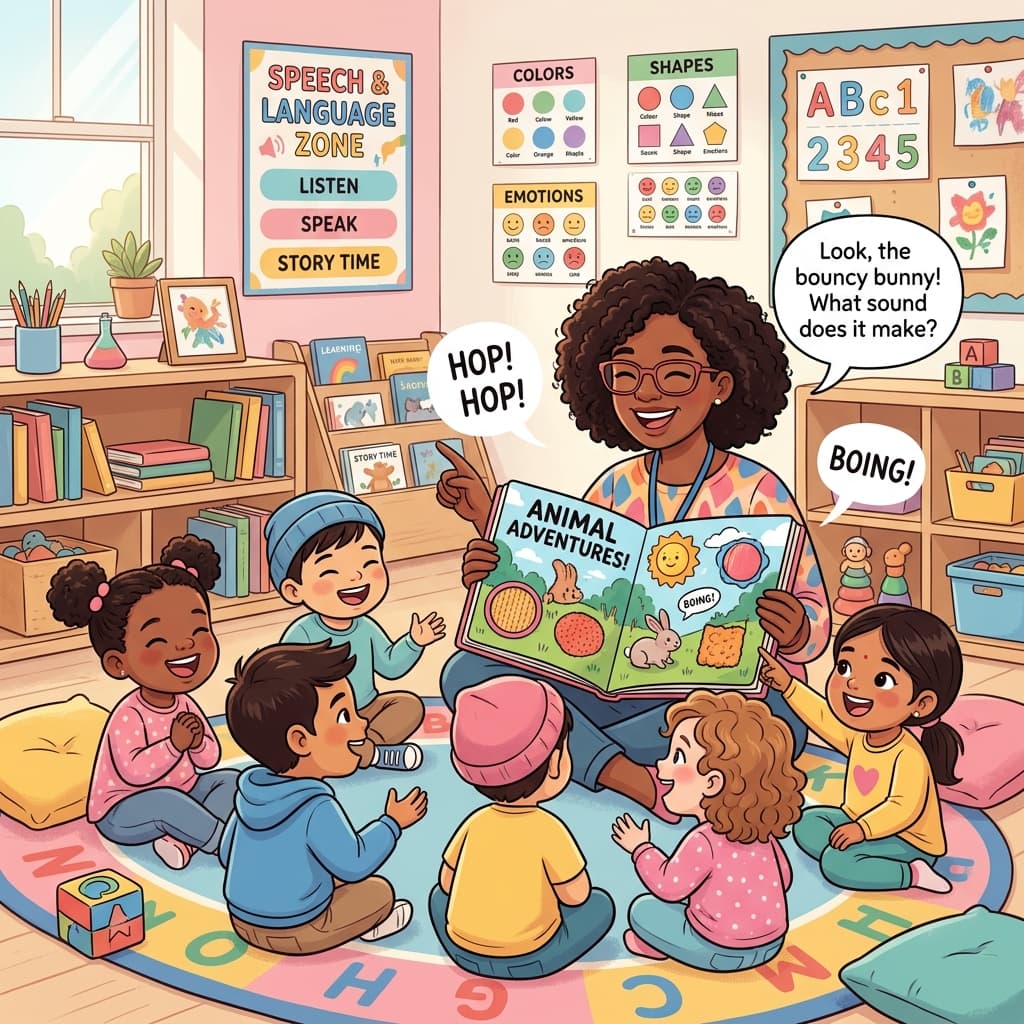
Teachers read with animated expressions, encouraging toddlers to predict story outcomes and ask questions.
🎭 Pretend & Drama Play
Role-playing kitchen sets, doctor clinics, and puppet shows unlock creative vocabulary naturally.
Frequently Asked Questions by Parents
Want to see how our play-based environment builds confident speakers?
Book a school walkthrough at Qurious Lil' Mindz in Valasaravakkam, Porur, or Alwarthirunagar today. Watch your child blossom in a nurturing, joyful space!