Why Routine Is Important
for Preschool Children
For young children, predictability isn't boring — it's the foundation of everything. A consistent daily routine gives preschoolers the security they need to explore, learn, and grow with confidence.
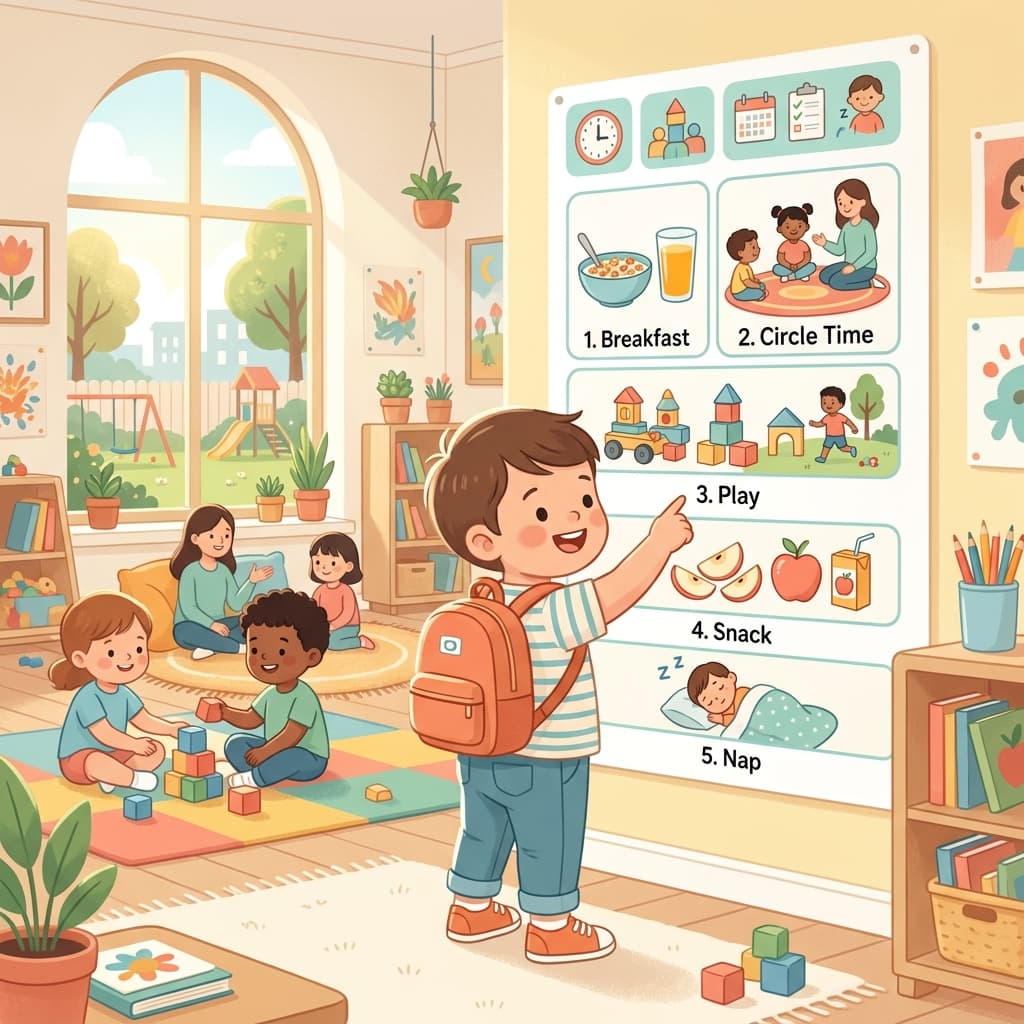

Ask any experienced early childhood educator what makes a great preschool, and you'll hear many answers — caring teachers, a rich curriculum, safe spaces to play. But there's one element that often goes unnoticed yet shapes everything else: a consistent, predictable daily routine.
For adults, routine can feel monotonous. But for a two-, three-, or four-year-old still making sense of the world, routine is nothing short of transformational.
What Does a Routine Actually Do?
A preschool routine is far more than a timetable. It's a framework of trust — a silent promise the day makes to a child: "Here's what will happen. You are safe. You know what to expect."
Children under five are wired to observe patterns. Their brains are actively building mental models of how the world works. Every time the same sequence of events unfolds — arrive, play, circle time, snack, learn, rest — the brain strengthens its understanding and frees up cognitive resources for curiosity, creativity, and connection.
Builds a Sense of Security
When children know what comes next, they feel safe. Predictability reduces anxiety and helps toddlers trust their environment.
Supports Brain Development
Repeated patterns strengthen neural pathways. Consistent routines are like daily exercise for the developing brain — building stronger connections over time.
Improves Emotional Regulation
Children who follow routines have fewer meltdowns. When the day is predictable, they have more emotional resources to handle transitions and surprises.
Boosts Independence
Routine teaches children to anticipate what comes next and gradually do it themselves — from putting on shoes to packing their bag.
Strengthens Social Skills
Classroom routines like group time, sharing, and taking turns happen consistently — helping children learn cooperation and empathy every single day.
Reduces Behavioural Challenges
Many challenging behaviours — tantrums, refusals, aggression — are often rooted in uncertainty. A stable routine minimises these triggers significantly.
A Day in Our Routine at Qurious Lil'Mindz
At Qurious Lil'Mindz, every day is thoughtfully sequenced to balance energy and calm, activity and rest, individual exploration and group connection. Here's a glimpse of what our structured-yet-joyful day looks like:
How to Build Routine at Home
The routine you build at home doesn't need to be rigid or complicated. Consistency matters far more than perfection. Here are six simple, research-backed tips to get started:
Keep morning routines consistent — same wake-up time, same sequence of getting ready.
A calming bedtime routine (bath → story → sleep) signals the brain that rest is coming.
Use visual schedules — pictures of each activity posted on the wall help pre-readers follow along independently.
Give 5-minute transition warnings. "In 5 minutes, we'll clean up and have lunch" prevents meltdowns.
Celebrate routine milestones — when your child packs their own bag or brushes teeth without prompting, acknowledge it!
Partner with your school. Ask teachers what the classroom routine looks like so home and school align.
Final Thoughts
A daily routine doesn't limit a child's freedom — it gives them the foundation to be free. When children know their world is safe and predictable, they can truly focus on what childhood is all about: wondering, discovering, connecting, and growing.
Routine is not about controlling children.
It's about giving them the wings to thrive.
References
- Harvard Center on the Developing Child. Establishing Schedules and Routines: A Key to Children's Learning and Wellbeing. developingchild.harvard.edu
- Mindell, J. A., & Williamson, A. A. (2018). Benefits of a bedtime routine in young children: Sleep, development, and beyond. Sleep Medicine Reviews, 40, 93–108.
- Britto, P. R. et al. (2017). Nurturing care: promoting early childhood development. The Lancet, 389(10064), 91–102.